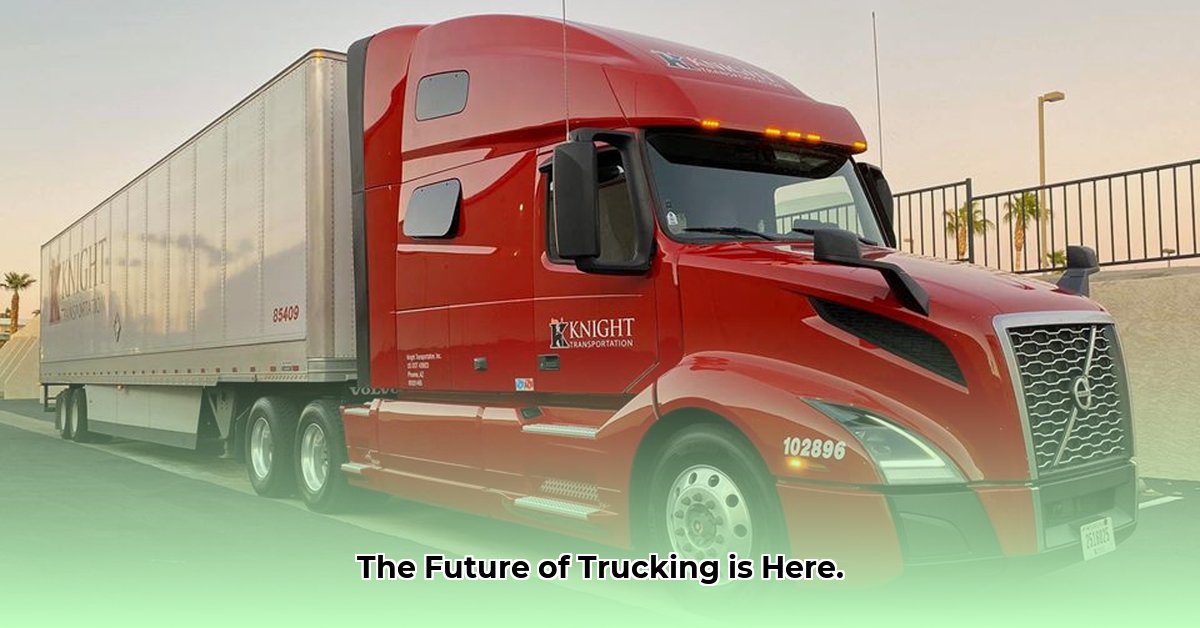
The Evolving Landscape of Freight Tractors
The freight trucking industry is undergoing a dramatic transformation. Driver shortages are impacting delivery times and increasing costs, while fluctuating fuel prices add further complexity. However, technological advancements offer significant opportunities for improvement. Freightliner, a leading manufacturer, is at the forefront of this evolution, integrating new technologies and strategies to navigate these challenges and shape the future of freight transportation. This requires manufacturers and trucking companies to adapt quickly to remain competitive.
Autonomous Driving: Beyond the Horizon
Autonomous freight tractors are no longer a distant prospect. Freightliner's substantial investments in this technology are yielding promising results in controlled environments. However, significant hurdles remain, including regulatory approval, infrastructure limitations, and public acceptance. "[Autonomous trucking] is a complex and evolving field with substantial challenges ahead," says Dr. Anya Sharma, Professor of Transportation Engineering at MIT. While widespread adoption won't happen overnight, autonomous vehicles are likely to play an increasingly prominent role in the trucking industry within the coming decade. This is backed by pilot programs that are yielding promising efficiency gains. But what percentage of the fleet will be autonomous in the next 5 years? Only time will tell.
Telematics: Data-Driven Efficiency
Telematics systems are revolutionizing fleet management, offering real-time data on various aspects of truck operations, including location, speed, fuel consumption, and engine performance. This data allows for route optimization, predictive maintenance, and enhanced fuel efficiency leading to substantial cost savings and improved operational efficiency. "[Telematics] provides actionable insights that can significantly reduce operational costs and improve safety," explains David Miller, CEO of FleetWise Solutions. How much can telematics improve fuel efficiency? Studies suggest potential savings of up to 15%.
Greener Solutions: Alternative Fuels
Environmental concerns are driving the adoption of alternative fuels. Electric and hydrogen-powered trucks are emerging as viable alternatives to diesel, though they face challenges related to cost, infrastructure development, and range limitations. While widespread adoption may take time, the transition to cleaner fuels is inevitable. "The long-term viability of the trucking industry will depend on incorporating environmentally sustainable practices," notes Dr. Emily Carter, Professor of Chemical and Biomolecular Engineering at Princeton University. What percentage of the fleet will be electric or hydrogen-powered by 2030? Experts predict a significant, though not yet dominant, percentage.
The Persistent Driver Shortage: A Critical Challenge
The industry's persistent driver shortage is a major constraint on the ability to meet growing demand. Attracting and retaining drivers requires offering competitive wages and improved working conditions. This is not solely a problem facing Freightliner, but across much of the transportation industry. Automation cannot completely eliminate the need for human drivers. "[The driver shortage] is a multifaceted problem requiring innovative solutions, not simply technological fixes," asserts John Smith, President of the American Trucking Association. What strategies are most effective to attract and retain drivers? Industry reports suggest that increased pay, better benefits, and improved working conditions are key.
Navigating the Regulatory Landscape
Government regulations significantly impact the industry. The complexity of regulations surrounding autonomous vehicles, in particular, presents challenges for innovation and efficient operation. Consistent regulations across jurisdictions are essential for fostering safe and responsible technological advancement.
The Future of Freight Tractors: A Dynamic Outlook
The future of freight tractors is a complex interplay of technological progress and market dynamics. Companies must embrace innovation, improve operational efficiency, and adapt to changing regulatory environments to maintain competitiveness. This will influence how freight is transported not just in the US but across the globe. The potential for progress is considerable, despite the challenges.
Strategic Responses to Industry Shifts
- Prioritize Safety: Rigorous testing and validation are paramount for autonomous vehicle deployment.
- Embrace Technological Advancements: Continuous investment in advanced technologies is necessary to remain competitive.
- Engage Proactively with Regulators: Collaboration with policymakers is key for shaping favorable regulations.
The future of the freight trucking industry is contingent on addressing these challenges and capitalizing on the opportunities presented by new technologies. A holistic and collaborative approach involving manufacturers, regulators, and the broader community is crucial for ensuring a safe, efficient, and sustainable future.